Graves of Clergymen
A west-facing burial tradition at Templecurraheen, and the story behind one priest's grave.
Did you know that clergymen were sometimes buried facing West, rather than East like everyone else? The reason is uncertain, but Templecurraheen holds examples of this tradition.

Rev. Father John O'Neill (Headstone K.82)
One such grave is that of Rev. Father John O'Neill, Prior of the Carmelite house at Castlelyons, who died on 28th November 1769 at the age of 61. His headstone, which faces westward, reads:
"Here lieth the body of the Rev. John O'Neill, Prior of the Carmelite of Castle Lyons who died the 28th November, 1769 aged 61 years."
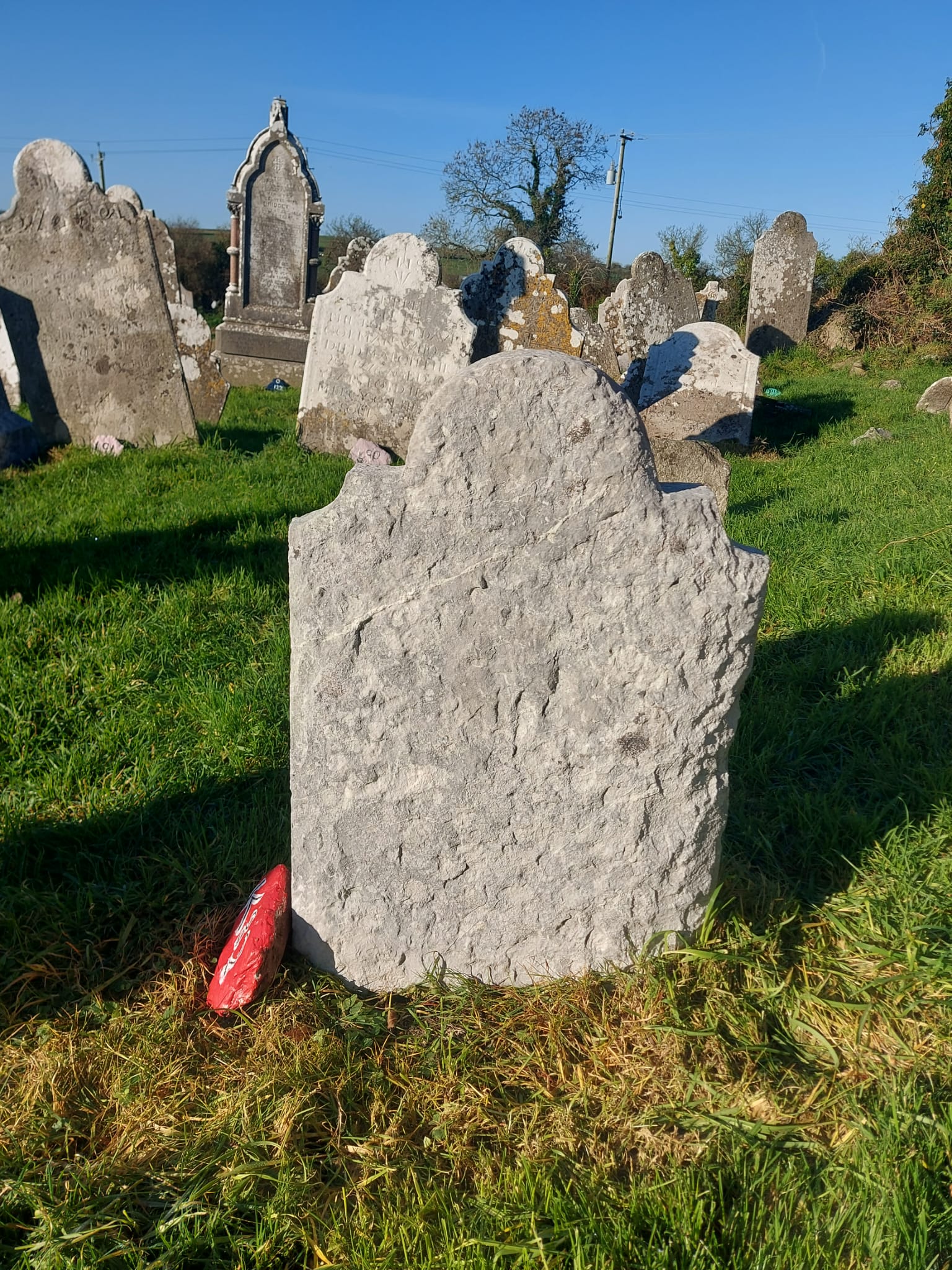
This inscription confirms that Castlelyons Priory belonged to the Carmelites, not the Dominicans as was once thought. The headstone (K.82) lies beside the Coppinger family tomb, an adjacency that is no accident, as the rest of his story makes clear.
A priest of the Penal Times
Father John lived during the Penal Times, the long century when Catholic clergy in Ireland practised their ministry under threat of imprisonment, exile or worse. He died, the headstone tells us, at the age of 61, a long way from Castlelyons Abbey, where he had served as Promo, the Latin shorthand for Prior or Abbot, the head of the religious community.
How exactly he came to be buried here, several miles from his own abbey, is not recorded. But the most likely explanation lies with the Coppinger family. The Coppingers were one of the prominent Old English Catholic families of East Cork, and they were known throughout the Penal era for sheltering priests on the run, including Carmelite friars and others, given protection despite the risks. A travelling or hunted cleric finding refuge in their household would not have been unusual.
Evidence in the stone
The headstone itself is the strongest hint. A priest forced to live in secrecy, moving between safe houses, would have died with little to his name, certainly not enough for a carved memorial. Yet here it stands. The more probable scenario is that Father John died at or near the Coppinger house, and that the family did the honourable thing: they buried him quietly in the local graveyard and paid for an epitaph to mark the spot.
One detail on the stone gives the game away. The inscription uses the word promodial, a Latin ecclesiastical term for the office of a religious superior. No Irish peasant of the period would have known the word, let alone commissioned its carving on a headstone. The inscription is the work of someone with both money and a Latin education: the unmistakable fingerprints of the Coppingers, or someone like them, ensuring that Father John O'Neill was remembered not as a fugitive but as the Abbot he was.
It is a small stone in a country graveyard. But it carries, between its lines, a story of faith kept under pressure, of a community that protected its own, and of one priest whose death, far from his abbey, in someone else's house, was nonetheless given the dignity his life had been denied.